What Should I Do If My Cat Stops Eating for More Than a Day?
A cat that stops eating for more than 24 hours is at risk of serious complications like hepatic lipidosis. Learn the warning signs and when to call your vet.
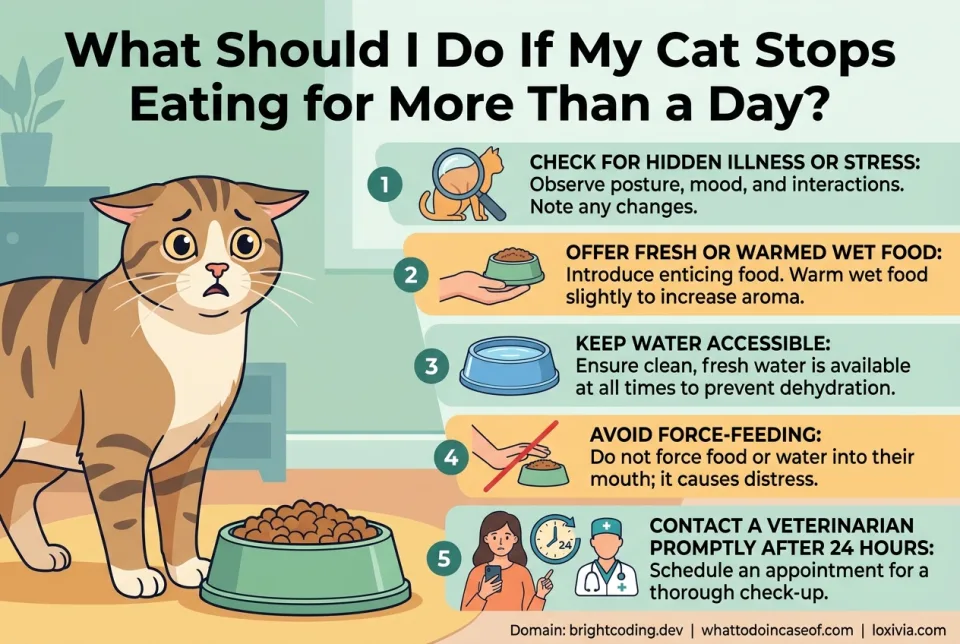
Quick answer
5 steps — read this before anything else
-
1
Call your veterinarian immediately if your cat has not eaten for more than 24 hours.
-
2
Check for other signs: vomiting, diarrhea, lethargy, hiding, or pain.
-
3
Do not force-feed your cat or give human medications.
-
4
Offer small amounts of strongly scented wet food, but do not wait to seek help.
-
5
Follow your vet's instructions; they may recommend an exam and bloodwork.
Warning
A cat that has not eaten for more than 24 hours can develop hepatic lipidosis, a life-threatening liver condition. Call your veterinarian immediately. Do not force-feed or give human medications.
Important — please read
This content is general educational and informational only, and is not a substitute for professional medical advice, diagnosis or treatment. Always seek the advice of a qualified health provider with any questions you may have about a medical condition. Never disregard or delay seeking professional medical care because of something you read here. In an emergency or life-threatening situation, call your local emergency services (police, fire or ambulance) immediately.
If your cat has stopped eating for more than a day, it is a medical concern that needs prompt attention. Cats are not designed to go without food for long periods. When they do not eat, their body mobilizes fat to the liver, which can lead to a dangerous condition called hepatic lipidosis (fatty liver). This can happen quickly, especially in overweight cats, and can become life-threatening. Do not wait to see if your cat will eat on its own.
What to do first
- Call your veterinarian right away. Explain that your cat has not eaten for over 24 hours. They will advise you on whether to bring your cat in immediately or monitor at home.
- Observe and note other symptoms. Look for vomiting, diarrhea, lethargy, hiding, bad breath, drooling, pawing at the mouth, or changes in drinking. These help your vet determine the cause.
- Do not force-feed. Never squirt food or water into your cat's mouth. This can cause choking or aspiration pneumonia.
- Offer tempting food. Try a small amount of warm, strongly scented wet food, or a little tuna water (not the tuna itself) to stimulate appetite. If your cat refuses, do not delay veterinary care.
- Keep your cat comfortable. Provide a quiet, warm space and fresh water. Do not give any human medications, including pain relievers, which can be toxic to cats.
When to call for help
Call your vet immediately if your cat has not eaten for 24 hours, or sooner if you see any of these signs:
- Vomiting or diarrhea
- Weakness, staggering, or collapse
- Breathing difficulty
- Yellowing of the skin, gums, or eyes (jaundice)
- Seizures or disorientation
- Known ingestion of a toxin or foreign object
These can indicate a medical emergency. Do not wait for an appointment.
What NOT to do
- Do not force-feed your cat.
- Do not give human medications, including acetaminophen or ibuprofen, which are highly toxic to cats.
- Do not wait more than 24 hours to seek veterinary advice.
- Do not change your cat's diet abruptly without veterinary guidance.
What to expect at the vet
Your veterinarian will perform a physical exam and may recommend blood tests, urine tests, X-rays, or ultrasound to find the underlying cause. Common causes include dental disease, gastrointestinal issues, kidney disease, pancreatitis, cancer, or stress. Treatment depends on the diagnosis and may include fluids, anti-nausea medication, appetite stimulants, or a feeding tube in severe cases.
How to prevent it
Feed a balanced diet, keep regular vet checkups, and monitor your cat's eating habits daily. If your cat is overweight, work with your vet on a safe weight-loss plan. Stress reduction and a consistent routine can also help prevent appetite loss.
If your cat has not eaten for more than a day, call your veterinarian now. This is general information and not a substitute for professional medical advice. In an emergency, contact your local emergency veterinary service immediately.
Sources & references
Spotted an error? Report it — we correct factual mistakes promptly.
Read next
What Should You Do If Your Dog Is Sprayed by a Skunk?
Skunk spray is oily and stubborn, but a simple homemade rinse works far better than plain water. Here is how to safely de-skunk your dog without irritating its skin or eyes.
What Should You Do If You See a Dog Left in a Hot Car?
A dog locked in a hot car can suffer heatstroke or die within minutes. Learn how to assess the situation, get help, and act safely without putting yourself or the animal at risk.
What Should I Do If My Pet Has a Chronic Illness?
Caring for a pet with a chronic illness requires a long-term partnership with your veterinarian, careful monitoring, and daily management to keep your pet comfortable and maintain quality of life.
What Should I Do If an Adoption Is Not Going as Planned?
Adoption delays, changes of heart, or unexpected legal hurdles are common and rarely mean the process is over. Here is how to stabilise the situation, protect your rights, and decide your next step.
Related handy tools
Checklists, decision guides, scenarios and quizzes for the same situation.