What Should You Do If Your Dishwasher Floods Your Kitchen?
A dishwasher leak can quickly turn your kitchen into a slippery, water-damaged mess. Acting fast and safely can minimize damage and prevent electrical hazards.
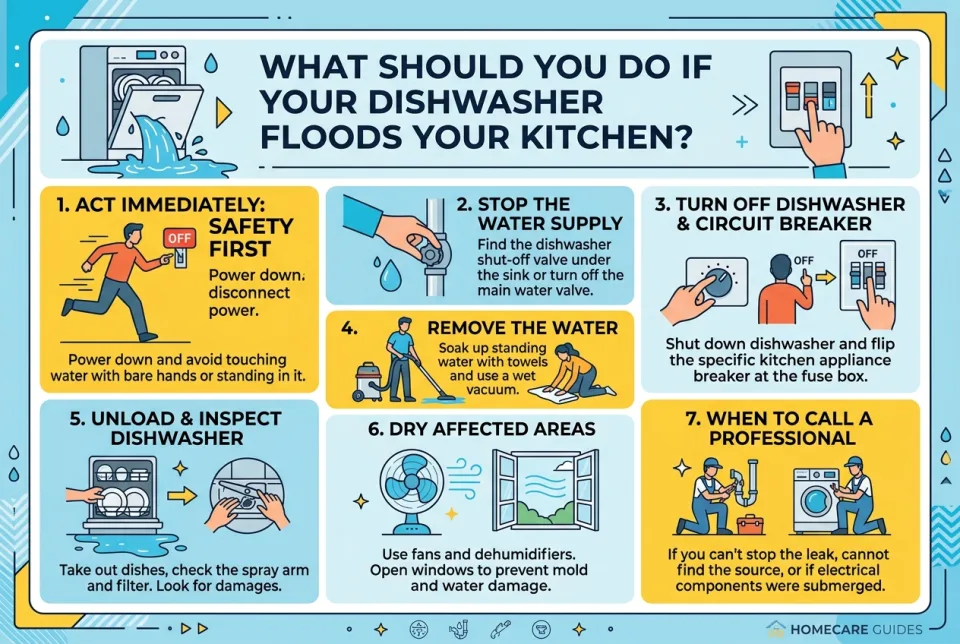
Quick answer
5 steps — read this before anything else
-
1
Stop the dishwasher and turn off its power at the breaker if safe to reach.
-
2
Shut off the water supply valve under the sink or the main water valve.
-
3
Avoid walking through standing water near outlets or appliances.
-
4
Remove standing water with towels, a mop, or a wet/dry vacuum.
-
5
Call a plumber or appliance technician to find and fix the leak.
Warning
Never touch electrical cords, outlets, or the dishwasher while standing in water. If you cannot safely reach the breaker panel, leave the area and call for professional help.
Water spreading across your kitchen floor is stressful, but a calm, quick response can limit damage and keep you safe. The first priority is to stop the water and eliminate electrical hazards, then clean up and arrange repairs.
What is happening
A dishwasher can flood because of a blocked or kinked drain hose, a failed door gasket, a stuck float switch, a loose water supply connection, or a cracked tub. Water may come from under the door, from the base of the unit, or from the sink cabinet. The source matters for the repair, but your immediate steps are the same.
Emergency warning
If water is near electrical outlets, power cords, or the dishwasher itself, do not touch anything electrical. Go to your home's main breaker panel and switch off power to the kitchen and dishwasher only if you can reach the panel without stepping in water. If you cannot reach it safely, leave the area and call a qualified electrician or your local emergency services if there is any risk of shock or fire.
What to do first
- Stop the dishwasher. Press cancel or off. Do not open the door if water will rush out.
- Cut the water. Turn the shut-off valve under the sink clockwise until it stops. If you cannot find it, turn off the main water valve for the house.
- Cut the power safely. If you can reach the breaker panel without walking through water, switch off the dishwasher circuit. Otherwise, keep everyone away from the wet area.
- Keep people and pets back. Wet tile and vinyl are very slippery. Warn everyone in the home.
- Contain the spread. Lay towels or old blankets at doorways to stop water from reaching carpet or other rooms.
Clean up and dry out
- Remove standing water with a mop, towels, or a wet/dry vacuum. Empty the vacuum outside or in a utility sink.
- Pull out the dishwasher only if it is unplugged or the breaker is off, and only if you can do so without damaging the floor or plumbing.
- Open windows and run fans or a dehumidifier to speed drying. Mold can begin growing within 24 to 48 hours in damp materials.
- Check cabinets, baseboards, and the subfloor for trapped moisture. If water soaked into drywall or under flooring, a professional water-damage restoration company may be needed.
- Do not use the dishwasher again until the cause is repaired.
What NOT to do
- Do not stand in water while touching electrical cords, outlets, or the dishwasher.
- Do not run the dishwasher again to "see if it still works."
- Do not ignore water that seeped under flooring or into cabinets; hidden moisture causes mold and rot.
- Do not use a regular household vacuum to suck up water.
When to call for help
Call a licensed plumber or appliance repair technician if you cannot find the shut-off valve, if the leak continues after you stop the cycle, or if the dishwasher needs a new hose, gasket, or pump. Call a water-damage restoration professional if water reached drywall, carpet, or the subfloor. Call an electrician if any electrical component got wet.
How to prevent it
- Inspect the water supply line and drain hose yearly for cracks or loose fittings.
- Clean the filter and check the door gasket regularly.
- Know where your under-sink shut-off valve and main water valve are before an emergency.
- Consider a water leak alarm or automatic shut-off device near the dishwasher.
Once the water is stopped and cleaned up, arrange a professional inspection before running the dishwasher again. Quick action protects your home and your safety.
Spotted an error? Report it — we correct factual mistakes promptly.
Read next
What Should You Do If Your Washing Machine Leaks Into Your Home?
A washing machine leak can cause water damage, electrical hazards, and slip risks. Learn how to shut off the water, make the area safe, and clean up properly.
What Should You Do If Your Dishwasher Leaves Dishes Dirty?
A dirty dishwasher load is usually a loading, water, or maintenance problem, not a broken machine. Here are 10 practical fixes to get your dishes clean again.
What Should You Do If Your Dishwasher Leaves Dishes Dirty?
A dirty dishwasher load is usually a loading, water, or filter problem. Work through these 10 practical fixes in order before calling a technician.
What to Do If You Drop a Ring Down the Sink Drain
Dropping a ring down the drain can be stressful, but acting fast and stopping the water allows you to easily retrieve it from the plumbing P-trap.
Related handy tools
Checklists, decision guides, scenarios and quizzes for the same situation.