What Should You Do If You Run Out of Water on a Hike?
Running out of water on a hike can quickly become dangerous, especially in heat. Learn how to conserve, find safe water, and recognize when to call for help.
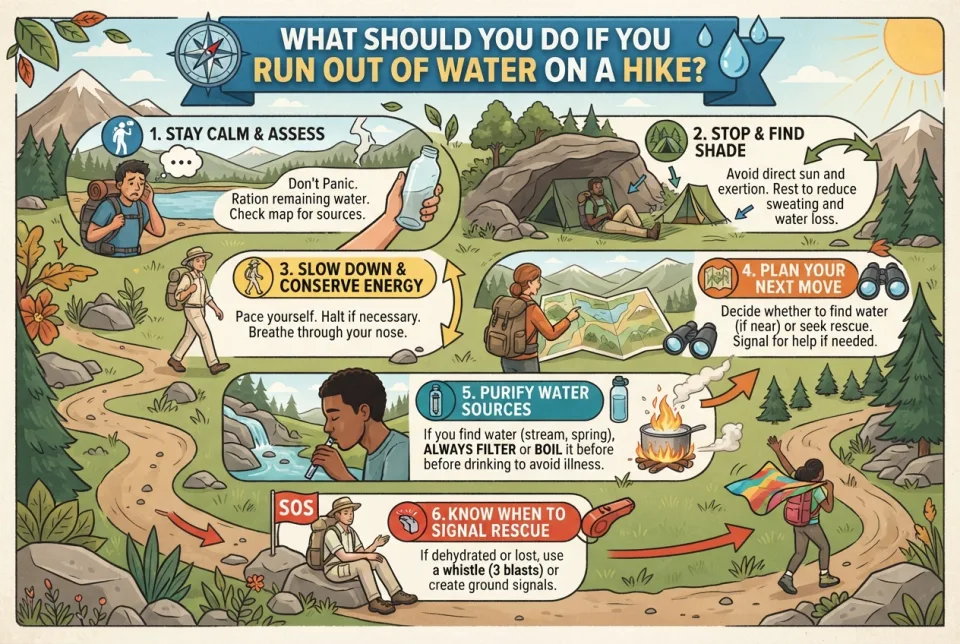
Quick answer
5 steps — read this before anything else
-
1
Stop hiking and rest in shade to reduce sweating and water loss.
-
2
Do not drink untreated water from streams, lakes, or puddles unless you have a filter or purification method.
-
3
Ration remaining water: sip small amounts, avoid gulping, and do not share unless necessary.
-
4
If you have no water and no safe source, turn back or call emergency services if you feel dizzy, confused, or stop sweating.
-
5
Signal for help using a whistle, mirror, or phone if you have coverage.
Warning
Heat stroke and severe dehydration are life-threatening. Call emergency services immediately if someone is confused, has hot dry skin, stops sweating, or faints. Do not drink untreated water unless you can purify it.
Important — please read
This content is general educational and informational only, and is not a substitute for professional medical advice, diagnosis or treatment. Always seek the advice of a qualified health provider with any questions you may have about a medical condition. Never disregard or delay seeking professional medical care because of something you read here. In an emergency or life-threatening situation, call your local emergency services (police, fire or ambulance) immediately.
Running out of water on a hike is a serious situation that can lead to heat exhaustion, heat stroke, and dangerous dehydration. The right actions depend on how much water you have left, how far you are from help, and the weather. This guide covers what to do step by step, what not to do, and when to call for emergency help.
What is happening
Your body loses water through sweat and breathing. When you run out, dehydration begins. Early signs include thirst, dry mouth, and dark urine. Later signs include dizziness, headache, nausea, muscle cramps, and confusion. In hot weather, these can progress quickly. Heat stroke is a medical emergency: the body's temperature rises dangerously and sweating may stop.
Emergency warning
Call local emergency services immediately if you or someone with you is confused, has hot dry skin, stops sweating, faints, has a seizure, or cannot walk. These are signs of heat stroke or severe dehydration. Do not wait. While waiting for help, move the person to shade, loosen clothing, and cool them with water or wet cloths if available.
What to do first
- Stop and rest in shade. Reduce physical effort to slow water loss. Sit down, elevate your feet if possible.
- Assess your situation. How much water do you have? How far to the trailhead, a water source, or cell signal? Check your map and phone.
- Ration what is left. Take small sips, not gulps. Swish water in your mouth before swallowing. Do not drink it all at once.
- Do not drink untreated water from streams, rivers, lakes, or puddles unless you have a reliable filter, purification tablets, or can boil it. Untreated water can cause serious illness, which worsens dehydration.
- If you have a filter or purification method, collect and treat water from a flowing source, not stagnant pools. If you can boil, bring water to a rolling boil for at least one minute (three minutes at high altitude).
- If you have no water and no safe source, turn back toward the trailhead or the nearest known help. Walk slowly, rest often, and stay in shade.
- Signal for help if you cannot move safely. Use a whistle (three blasts), a mirror, bright clothing, or your phone. Conserve phone battery.
What NOT to do
- Do not drink urine, alcohol, or seawater. They worsen dehydration.
- Do not drink from unknown sources without treating the water.
- Do not keep hiking uphill or in full sun if you are already dehydrated.
- Do not give all your water to others if it leaves you unable to function. Share only if you can both stay safe.
- Do not ignore early warning signs like dizziness or cramps.
When to call for help
Call emergency services or activate a personal locator beacon if you have no water, no safe source, and you cannot reach the trailhead within a few hours, or if anyone shows signs of heat stroke or severe dehydration. If you have no signal, stay put if you are lost or too weak to continue, and make yourself visible.
What to monitor
Watch for worsening symptoms: confusion, slurred speech, rapid heartbeat, nausea, or stopping sweating. Check urine color: dark yellow or brown means severe dehydration. If symptoms worsen, seek emergency care.
How to prevent it
Carry more water than you think you need: at least half a liter per hour of hiking in heat, more for strenuous climbs. Bring a filter or purification tablets as backup. Drink regularly before you feel thirsty. Turn back early if water runs low.
This is general information and not a substitute for professional medical advice. In an emergency, call your local emergency services immediately.
Sources & references
Spotted an error? Report it — we correct factual mistakes promptly.
Read next
What should you do if your tent leaks during a rainstorm?
Stay dry and safe when your tent leaks in a storm: protect your sleeping bag, find the leak, and make temporary repairs without making things worse.
What should you do if you get caught in a rip current while swimming?
Rip currents are powerful, narrow channels of fast-moving water that can pull even strong swimmers away from shore. Knowing how to respond calmly and correctly can save your life.
What Should You Do If You Get a Blister While Backpacking?
Blisters are the most common backpacking injury. Acting early, before the blister fully forms, can keep you walking. Here is how to treat one safely on the trail.
What Should You Do If a Wild Animal Enters Your Campsite?
Stay calm, keep your distance, and never feed or corner a wild animal. Learn how to react safely to bears, raccoons, snakes, and other wildlife in camp.
Related handy tools
Checklists, decision guides, scenarios and quizzes for the same situation.