What Should You Do If You Lose Your Wallet While Traveling Abroad?
Losing your wallet abroad is stressful but manageable. Act quickly to secure your money and identity, then replace what you need to get home.
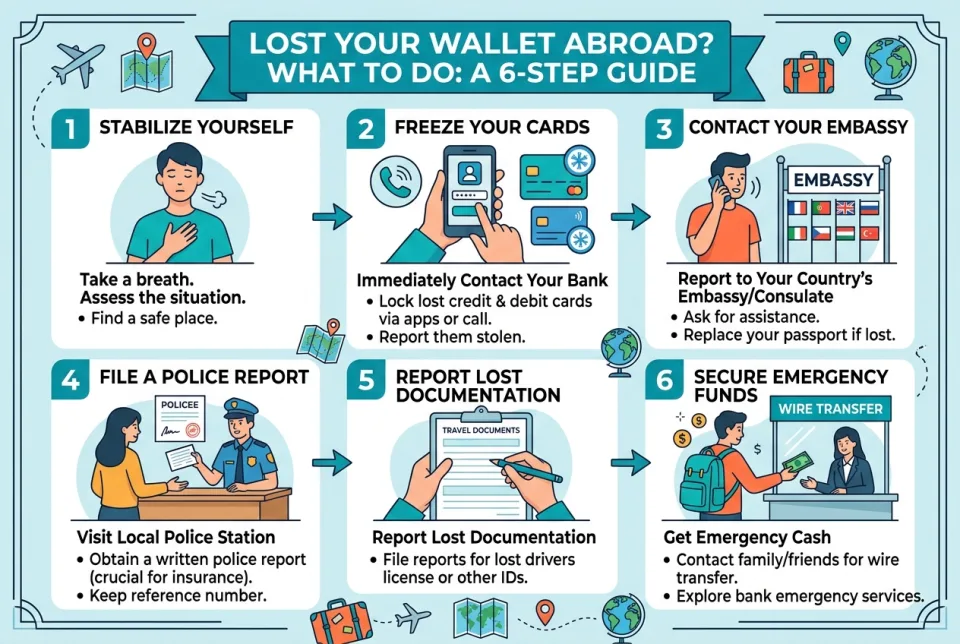
Quick answer
5 steps — read this before anything else
-
1
Report your cards lost or stolen to your bank and card issuers immediately.
-
2
File a police report in the country where you lost it, and keep a copy.
-
3
Contact your embassy or consulate if you need emergency travel documents.
-
4
Freeze your credit and replace your ID once you are safe.
-
5
Use a backup payment method or a trusted contact to get cash.
Warning
If you are in immediate danger, being threatened, or have been robbed, contact local emergency services right away. Do not confront anyone over a stolen wallet.
Losing your wallet in a foreign country can feel overwhelming, especially if you do not speak the language or know the local systems. The key is to move quickly and in the right order: secure your money and identity first, then deal with replacing documents and getting home.
What to do first
- Report your cards lost or stolen. Call your bank and every card issuer right away. Most have 24-hour international numbers, often on the back of the card or in your banking app. Ask them to freeze or cancel the cards and to send replacements if you will be abroad long enough.
- File a police report. Go to the nearest police station in the area where you lost the wallet. Ask for a written report or a copy with a case number. This is often required for insurance claims, replacing documents, or disputing fraudulent charges.
- Contact your embassy or consulate. If your passport was in the wallet, report it lost and ask about an emergency passport or travel document. Bring any ID you still have and the police report.
- Freeze your credit. If you have credit accounts, place a freeze or fraud alert with the major credit bureaus in your home country. This helps stop new accounts being opened in your name.
- Get access to money. Use a backup card, a travel companion, or a money transfer service. Avoid carrying large amounts of cash you cannot replace.
What NOT to do
- Do not wait until you get home to report the loss. Fraud can happen within minutes.
- Do not share your PIN, passwords, or one-time codes with anyone who calls or messages you, even if they claim to be from your bank.
- Do not leave the police station without a copy of the report.
- Do not carry your passport and all your cards together in one place again.
Replace your documents
Once your money is secure, focus on identification. A passport is the most important document for international travel. Your embassy can usually issue an emergency passport, but you may need photos, a police report, and proof of identity. If your driver's license or national ID was lost, ask your embassy what is accepted for travel and check whether you can replace it online or by mail later.
Prevent it next time
- Keep a digital and paper copy of your passport, cards, and emergency numbers, stored separately from the originals.
- Split your money and cards between a wallet, a money belt, and a hotel safe.
- Use a card that lets you freeze it instantly from an app.
- Save your bank's international contact numbers offline.
Acting in the first hour matters most. Secure your accounts, get a police report, and contact your embassy. With those steps done, replacing the rest becomes a manageable process rather than an emergency.
This is general information, not legal or financial advice. Rules and services vary by country, so confirm details with your bank, embassy, or local authorities.
Sources & references
Spotted an error? Report it — we correct factual mistakes promptly.
Read next
What Should You Do If Your Hotel Is Too Noisy?
A noisy hotel room can ruin a trip. Here are practical, polite steps to reduce noise and get a better night's sleep, from calling the front desk to using white noise.
What Should You Do If Your Travel Budget Runs Over?
Learn how to handle a travel budget overrun with practical steps to cut costs, track spending, and avoid debt while still enjoying your trip.
What to Do If You Lose Your Credit Card While Traveling
Losing a credit card abroad requires quick action. Follow these essential steps to lock your account, secure emergency funds, and prevent fraud.
What to Do If You Miss Your Flight
Missing a flight is stressful, but taking quick action increases your chances of getting rebooked promptly while protecting the rest of your travel itinerary.
Related handy tools
Checklists, decision guides, scenarios and quizzes for the same situation.