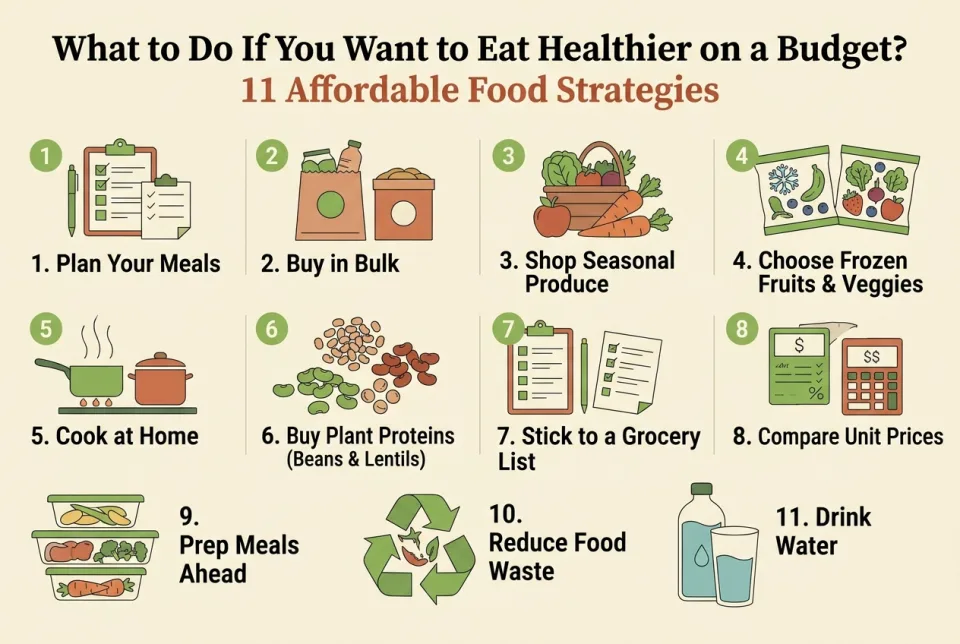
What to Do If You Want to Eat Healthier on a Budget? 11 Affordable Food Strategies
Eating healthier does not have to be expensive. These 11 practical strategies help you buy nutritious food for less, from meal planning and smart shopping to budget-friendly cooking at home.
Quick answer
5 steps — read this before anything else
-
1
Plan meals for the week before you shop and make a list.
-
2
Build meals around cheap staples like beans, lentils, rice, oats and eggs.
-
3
Buy fresh produce in season and frozen or canned when it is cheaper.
-
4
Compare unit prices and shop store brands to cut costs.
-
5
Cook at home in batches and use leftovers to avoid waste.
Eating healthier and spending less can go together. The key is to focus on affordable, nutrient-dense foods and to plan so that little goes to waste. Here are 11 strategies you can start using today.
1. Plan your meals for the week
Before shopping, decide what you will eat for the main meals of the week. A simple plan reduces impulse buys and repeated trips to the store. Check what you already have in your cupboards and fridge first.
2. Shop with a list and a budget
Write a list based on your meal plan and set a rough spending limit. Stick to the list where you can. Shopping without a list often leads to extra items you do not need.
3. Build meals around cheap staples
Beans, lentils, rice, oats, pasta, potatoes, eggs and canned tomatoes are inexpensive and versatile. They form the base of many healthy meals and keep well.
4. Buy produce in season
Fruit and vegetables are usually cheapest and tastiest when they are in season locally. Ask at the market or check what is on special that week.
5. Use frozen and canned vegetables and fruit
Frozen vegetables and fruit are often as nutritious as fresh and cost less, especially out of season. Canned beans, tomatoes and fish are also good value. Choose options with no added salt or sugar where possible, or rinse canned beans to reduce salt.
6. Compare unit prices
The price on the shelf is not always the best deal. Unit prices (cost per kilogram or per litre) let you compare different sizes and brands fairly. Buying a larger bag of rice or oats is often cheaper per serving.
7. Choose store brands
Supermarket own-brand staples such as oats, rice, pasta, canned goods and frozen vegetables are usually cheaper than name brands and just as nutritious.
8. Cook at home and batch cook
Cooking from scratch is generally cheaper than ready meals and takeaway. Make a large pot of soup, stew, curry or chili and portion it out for several meals. Freeze what you will not eat within a few days.
9. Use leftovers and reduce waste
Plan a "use it up" meal each week to finish odds and ends. Store food properly so it lasts longer. Wasted food is wasted money.
10. Limit expensive drinks and snacks
Sugary drinks, coffee shop drinks and packaged snacks add up quickly and offer little nutrition. Water is cheap and healthy. Buy snacks in larger packs and portion them yourself.
11. Grow or share where you can
Even a windowsill of herbs or a small pot of salad leaves can save money. Community gardens, food co-ops and bulk-buying groups can also lower costs. Some areas have food banks or community fridges if money is very tight.
What to avoid
- Do not shop hungry, it often leads to extra purchases.
- Do not buy pre-cut or pre-prepared produce if whole versions are cheaper.
- Do not assume "healthy" labels mean good value; check the unit price and ingredients.
- Do not let fresh food spoil; freeze it if you will not use it in time.
A simple next step
Pick two or three of these strategies and try them this week. Small, consistent changes are easier to keep than a complete overhaul. If you have a medical condition or specific dietary needs, ask a doctor or registered dietitian for advice tailored to you.
Sources & references
Spotted an error? Report it — we correct factual mistakes promptly.
Read next
What to Do If You Want to Improve Your Life Without Major Changes?
Lasting change rarely comes from dramatic overhauls. Instead, small, consistent steps can compound into meaningful improvements in your health, relationships, and daily satisfaction.
What Should You Do If You Want to Start Exercising but Hate the Gym?
You do not need a gym membership to get fit. Here are 10 beginner-friendly ways to start moving, plus how to build a routine that actually sticks.
What Should You Do If You Crave Sugar Every Day?
Frequent sugar cravings are common and often manageable with practical changes to meals, sleep, and habits. Learn nine evidence-based ways to reduce daily cravings and when to seek medical advice.
What Should You Do If You Feel Tired After Drinking Coffee?
Coffee can make some people feel more tired instead of more alert. Here are eight practical things to consider and what to do next.
Related handy tools
Checklists, decision guides, scenarios and quizzes for the same situation.