What Should You Do If Your Camping Stove Malfunctions?
A malfunctioning camping stove can cause fires, explosions, or carbon monoxide poisoning. Learn how to respond safely and prevent accidents.
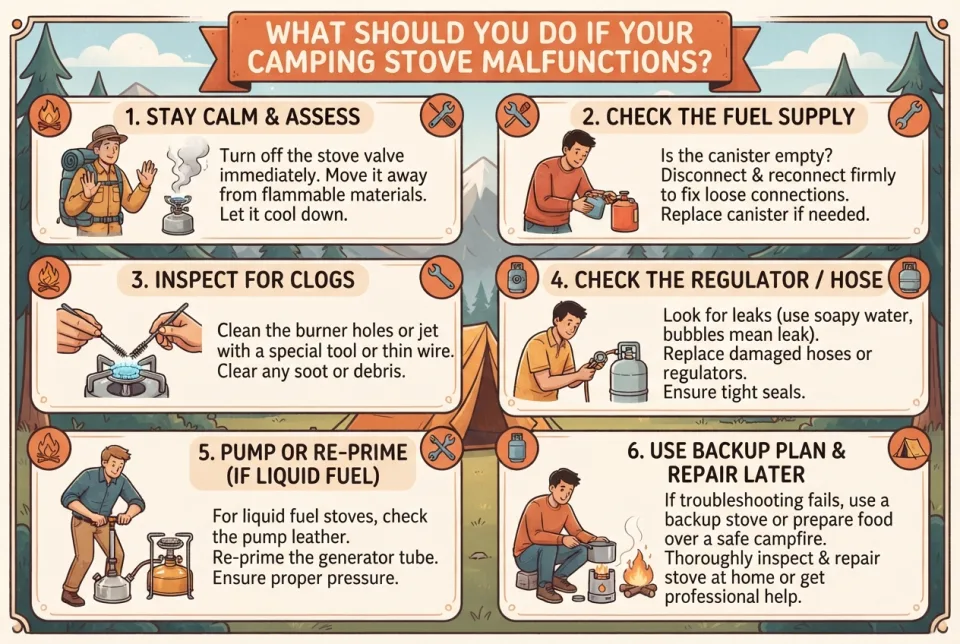
Quick answer
5 steps — read this before anything else
-
1
Turn off the stove and fuel supply immediately if safe to do so.
-
2
Move away from the stove, especially if you smell gas or see flames.
-
3
Do not attempt to repair a leaking or flaming stove; evacuate the area.
-
4
If fire spreads or you suspect carbon monoxide poisoning, call emergency services.
-
5
Ventilate the area by opening tent flaps or moving outdoors.
Warning
Carbon monoxide from camping stoves can be fatal. Never use a malfunctioning stove indoors or in a tent. If you suspect CO poisoning, get to fresh air and call emergency services.
Important — please read
This content is general educational and informational only, and is not a substitute for professional medical advice, diagnosis or treatment. Always seek the advice of a qualified health provider with any questions you may have about a medical condition. Never disregard or delay seeking professional medical care because of something you read here. In an emergency or life-threatening situation, call your local emergency services (police, fire or ambulance) immediately.
A camping stove malfunction can quickly turn a peaceful trip into a dangerous situation. Whether it is a fuel leak, a clogged burner, or a sudden flare-up, knowing how to react can prevent injuries and property damage. This guide covers immediate actions and safety precautions.
What Is Happening?
Camping stoves can malfunction in several ways: fuel leaks, blocked fuel lines, faulty valves, or improper assembly. These issues may cause flames to shoot out uncontrollably, fuel to spray, or the stove to produce carbon monoxide (CO), a colorless, odorless gas. CO poisoning can be fatal if the stove is used in an enclosed space like a tent.
Emergency Warning
If you see a large fire, hear a hissing sound, or smell gas, treat it as an emergency. Call local emergency services immediately if the fire is spreading or if anyone shows signs of CO poisoning (headache, dizziness, nausea, confusion).
What to Do First
- Stay calm and assess the situation. If the stove is flaming but contained, and you can safely reach the fuel valve, turn it off. If the fire is large or growing, do not attempt to turn it off; evacuate.
- Turn off the fuel supply if it is safe to do so. For canister stoves, turn the valve clockwise until tight. For liquid fuel stoves, close the pump valve or turn off the fuel bottle.
- Move away from the stove. If you cannot safely turn off the fuel, back away slowly. Do not run, as this can fan flames.
- If the stove is inside a tent, get everyone out immediately. Open all tent flaps to ventilate. Move to fresh air.
- If there is a fire, use a fire extinguisher (Class B for flammable liquids) if available and you are trained. Otherwise, smother small flames with a heavy blanket or dirt. Never use water on a fuel fire.
- If you suspect carbon monoxide poisoning, move everyone to fresh air immediately and call emergency services. CO poisoning can cause loss of consciousness without warning.
What NOT to Do
- Do not try to repair a leaking or flaming stove. This can cause burns or explosions.
- Do not use water on a fuel fire; it can spread the flames.
- Do not ignore a gas smell. Even a small leak can ignite.
- Do not use a malfunctioning stove inside a tent, even briefly. CO can build up rapidly.
- Do not shake or hit the stove to fix it; this can damage components and cause leaks.
When to Call for Help
Call emergency services if:
- The fire cannot be controlled or is spreading.
- Anyone has burns, difficulty breathing, or signs of CO poisoning.
- You cannot safely turn off the fuel supply.
If you are in a remote area, use a satellite messenger or phone to call for help. If no signal, send someone for help while others stay with the injured person.
What to Monitor
After the incident, monitor anyone who was exposed to fumes for symptoms of CO poisoning: headache, dizziness, nausea, confusion, or shortness of breath. Seek medical attention if symptoms persist or worsen. Also check the stove and fuel connections for damage before using again.
How to Prevent Malfunctions
- Inspect your stove and fuel connections before each trip. Look for cracks, leaks, or worn O-rings.
- Follow the manufacturer's instructions for assembly and lighting.
- Use stoves only in well-ventilated areas, never inside a tent or enclosed space.
- Store fuel properly and check for leaks before use.
- Carry a fire extinguisher and a carbon monoxide detector when camping.
If your stove malfunctions, prioritize safety over saving equipment. Turn off the fuel if safe, evacuate if not, and seek help for injuries or suspected CO poisoning. Always err on the side of caution.
This is general information and not a substitute for professional medical advice. In an emergency, call your local emergency services immediately.
Sources & references
Spotted an error? Report it — we correct factual mistakes promptly.
Read next
What Should You Do If Your Carbon Monoxide Alarm Goes Off?
A carbon monoxide alarm means you may be breathing a deadly, invisible gas. Get everyone outside immediately and call 911 or your local emergency number.
What should you do if your tent leaks during a rainstorm?
Stay dry and safe when your tent leaks in a storm: protect your sleeping bag, find the leak, and make temporary repairs without making things worse.
What Should You Do If You Run Out of Water on a Hike?
Running out of water on a hike can quickly become dangerous, especially in heat. Learn how to conserve, find safe water, and recognize when to call for help.
What Should You Do If You Get a Blister While Backpacking?
Blisters are the most common backpacking injury. Acting early, before the blister fully forms, can keep you walking. Here is how to treat one safely on the trail.
Related handy tools
Checklists, decision guides, scenarios and quizzes for the same situation.