What should you do if you feel lonely or isolated after retirement?
Retirement can bring a sudden loss of daily social contact. Rebuilding connection takes small, deliberate steps, and persistent loneliness is worth discussing with a doctor.
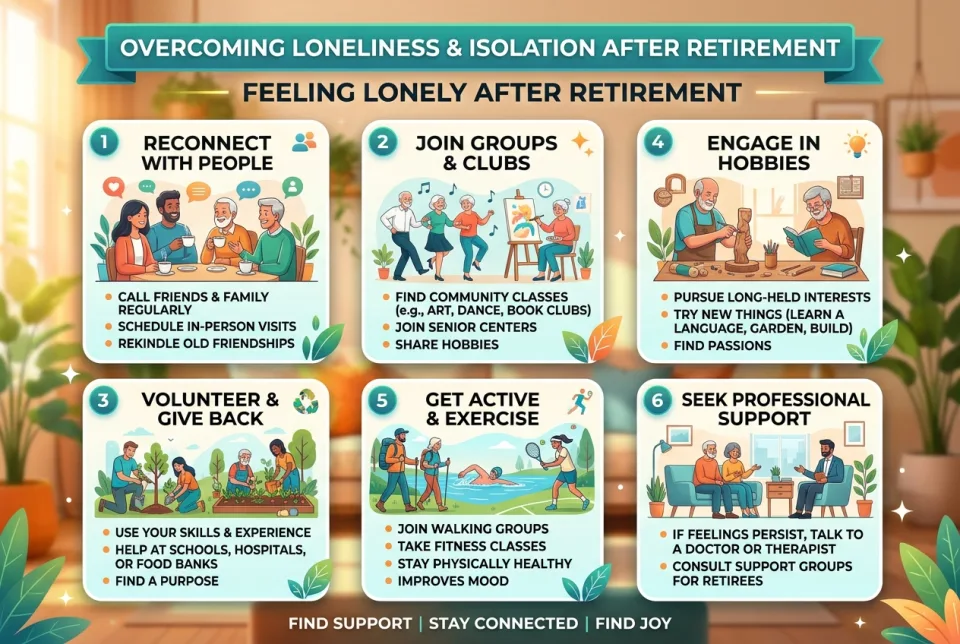
Quick answer
5 steps — read this before anything else
-
1
Name it: loneliness after retirement is common and not a personal failure.
-
2
Start small: one recurring activity or one phone call a week.
-
3
Rebuild routine: a fixed weekly schedule with at least one social anchor.
-
4
Try structured groups: volunteering, classes, clubs, faith or community centres.
-
5
If low mood, poor sleep or hopelessness persist for weeks, talk to a doctor.
Warning
If you have thoughts of harming yourself, this is an emergency. Contact your local emergency services or a crisis helpline immediately.
Retirement removes the structure and daily contact that work often provided. Many people find the first months surprisingly lonely, even when they were looking forward to stopping. That reaction is common, and it is not a sign that something is wrong with you.
What is happening
Work supplies three things that are easy to take for granted: a routine, a sense of purpose, and regular low-effort contact with other people. When all three disappear at once, the day can feel empty. Loneliness is the distress you feel when the connections you want do not match the connections you have. It is different from simply being alone, and it responds well to deliberate action.
What to do first
- Put one social anchor in the week. A fixed commitment, such as a Tuesday morning walking group or a Thursday volunteer shift, is easier to keep than a vague intention to see people.
- Reach out before you feel ready. Contact one person today: a former colleague, a neighbour, a family member. A short message is enough. Most people are glad to hear from you.
- Leave the house on a schedule. A daily walk at the same time builds the chance of repeated, familiar contact with the same faces.
- Choose activities with a built-in group. Classes, choirs, sports clubs, book groups, community gardens and men's sheds all provide a reason to keep showing up.
- Volunteer. Volunteering combines purpose, routine and people, and it is one of the most reliable ways to rebuild a social life after retirement.
What NOT to do
- Do not wait for invitations to arrive on their own. After retirement, you usually have to initiate.
- Do not rely only on television, scrolling or background radio as company. They can fill time without reducing loneliness.
- Do not assume you are a burden. Most friends and family members want to be asked.
- Do not treat alcohol as a way to manage empty evenings. It worsens sleep and low mood.
- Do not dismiss months of persistent loneliness as something you should simply tolerate.
When to seek professional care
Loneliness is linked to low mood, and the two can feed each other. Speak to a doctor or a mental health professional if you have felt persistently low, hopeless or unable to enjoy things for more than a couple of weeks, if your sleep or appetite has changed, or if you are drinking more than usual. If you have thoughts of harming yourself, treat it as an emergency and contact your local emergency services or a crisis line immediately.
What to monitor
Keep an eye on how many meaningful conversations you have in a week, whether you are leaving the house, your sleep and appetite, and whether your mood is lifting at all. A simple note on a calendar can show whether your steps are working.
How to prevent it
Plan for the social side of retirement before or soon after you stop working. Keep at least one regular commitment outside the home, maintain a handful of contacts you speak to monthly, and consider part-time work, study or volunteering if you miss the structure. If mobility, hearing or transport are barriers, ask your doctor, local council or community organisation about support, because these problems are often solvable.
Start with one action this week: one call, one group, one walk at the same time each day. Small repeated steps rebuild connection faster than waiting for a big change. This is general information and not a substitute for professional medical advice. If you are in crisis, contact your local emergency services.
Sources & references
Spotted an error? Report it — we correct factual mistakes promptly.
Read next
What should you do if you are considering a reverse mortgage?
A reverse mortgage can provide cash in retirement but comes with complex rules and long-term costs. Learn the essential steps to evaluate whether it fits your situation.
What should I do if I need to set up a power of attorney for an aging relative?
Setting up a power of attorney for an aging relative requires careful planning, legal advice, and clear communication. This guide outlines the key steps and considerations.
What to Do If You Feel Stuck in the Same Routine?
Feeling stuck in the same daily routine is common, and small, consistent changes can help you feel more engaged and refreshed. Here are 10 practical steps to try.
What Should You Do If You Feel Like Nobody Understands You?
Feeling misunderstood is a common and painful human experience. This guide offers practical steps to cope, connect, and find support.
Related handy tools
Checklists, decision guides, scenarios and quizzes for the same situation.