What Should You Do If You Suspect Elder Abuse or Neglect in a Care Facility?
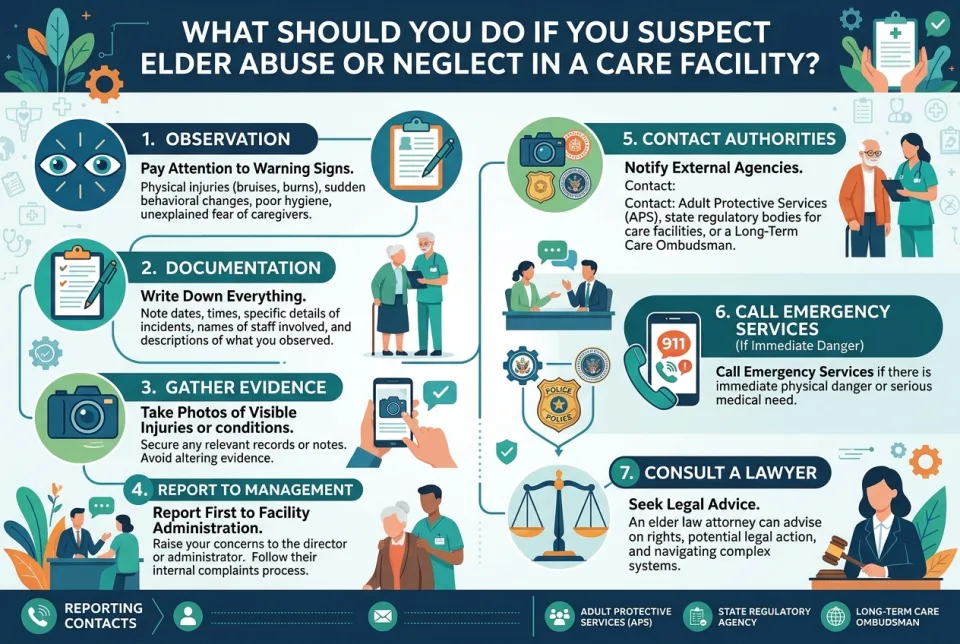
If you suspect an older adult is being abused or neglected in a care facility, act quickly: ensure immediate safety, document what you observe, and report to the proper authorities. You do not need proof to make a report.
Quick answer
5 steps — read this before anything else
-
1
If there is immediate danger, call 911 or local emergency services right away.
-
2
Separate the person from the suspected abuser if it is safe to do so, and get medical attention for any injuries.
-
3
Write down what you saw, heard, and when, using exact quotes and dates.
-
4
Report to the facility administrator, your state or local long-term care ombudsman, and adult protective services.
-
5
If the person is in immediate danger or a crime is suspected, also contact local law enforcement.
Warning
If the older adult is in immediate danger, seriously injured, or a crime is in progress, call 911 or local emergency services now. Do not confront a suspected abuser alone.
Suspecting that an older adult is being abused or neglected in a care facility is frightening and confusing. Abuse can be physical, emotional, sexual, financial, or neglect of basic needs. You do not need to be certain, and you do not need proof, to raise a concern. Reporting in good faith is protected in most places, and early action can prevent further harm.
Emergency warning
If the person is in immediate danger, is seriously injured, or you believe a crime is happening now, call 911 or your local emergency number immediately. Do not wait to gather more evidence first. If there is a life-threatening medical issue, emergency services come before any reporting process.
What to do first
- Ensure immediate safety. If you can do so safely, stay with the person or arrange for a trusted staff member or family member to be present. Do not confront a suspected abuser alone or in a way that could escalate the situation.
- Get medical attention for any injuries. Ask for a medical evaluation and, if injuries are present, ask that they be documented. You can request that photos be taken by a medical professional if the person consents.
- Write down what you observed. Record dates, times, locations, exact words spoken, visible injuries, and changes in the person's condition or behavior. Keep your notes factual and separate from your opinions.
- Report to the facility. Ask to speak with the administrator or director of nursing and request a written response. Keep a copy of anything you submit.
- Report to outside authorities. Contact your state or regional long-term care ombudsman, adult protective services, and the state licensing or health department that oversees the facility. If a crime is suspected, contact local law enforcement.
What NOT to do
- Do not wait for definitive proof. Reasonable suspicion is enough to report.
- Do not confront staff aggressively or accuse anyone in front of others, which can put the resident at greater risk.
- Do not remove or alter the person's belongings, medications, or records.
- Do not post details or photos on social media, which can compromise an investigation and the person's privacy.
- Do not assume someone else has already reported it.
Warning signs to watch for
- Unexplained bruises, fractures, burns, or pressure sores
- Fear, withdrawal, flinching, or sudden changes in behavior
- Poor hygiene, dehydration, weight loss, or untreated conditions
- Missing personal items or unexplained financial changes
- Staff refusing to let you see the person alone
When to seek professional help
Contact adult protective services or the long-term care ombudsman if you see any pattern of harm or neglect. If the person is in immediate danger, call emergency services. If you are unsure where to report, the Eldercare Locator (1-800-677-1116) can connect you with the right local agency.
How to prevent it
Visit regularly and at varied times, get to know the staff, review care plans, and ask questions about medications, injuries, and daily care. Keep a written record of concerns and follow up on every report you make.
Your report can protect someone who cannot speak for themselves. Take notes, make the calls, and keep following up until you get a response.
Sources & references
Spotted an error? Report it — we correct factual mistakes promptly.
Read next
What should you do if you are considering a reverse mortgage?
A reverse mortgage can provide cash in retirement but comes with complex rules and long-term costs. Learn the essential steps to evaluate whether it fits your situation.
What should I do if I need to set up a power of attorney for an aging relative?
Setting up a power of attorney for an aging relative requires careful planning, legal advice, and clear communication. This guide outlines the key steps and considerations.
What should you do if you feel lonely or isolated after retirement?
Retirement can bring a sudden loss of daily social contact. Rebuilding connection takes small, deliberate steps, and persistent loneliness is worth discussing with a doctor.
What Should You Do If You Cannot Afford a Senior Living Community?
Senior living costs can exceed $50,000 per year, but there are real alternatives. Learn how to find affordable housing, in-home care, and financial assistance programs.
Related handy tools
Checklists, decision guides, scenarios and quizzes for the same situation.