What should you do if you need to downsize and sell the family home?
Downsizing and selling the family home is a major financial and emotional decision. This guide walks you through the practical steps to plan, prepare, and sell with confidence.
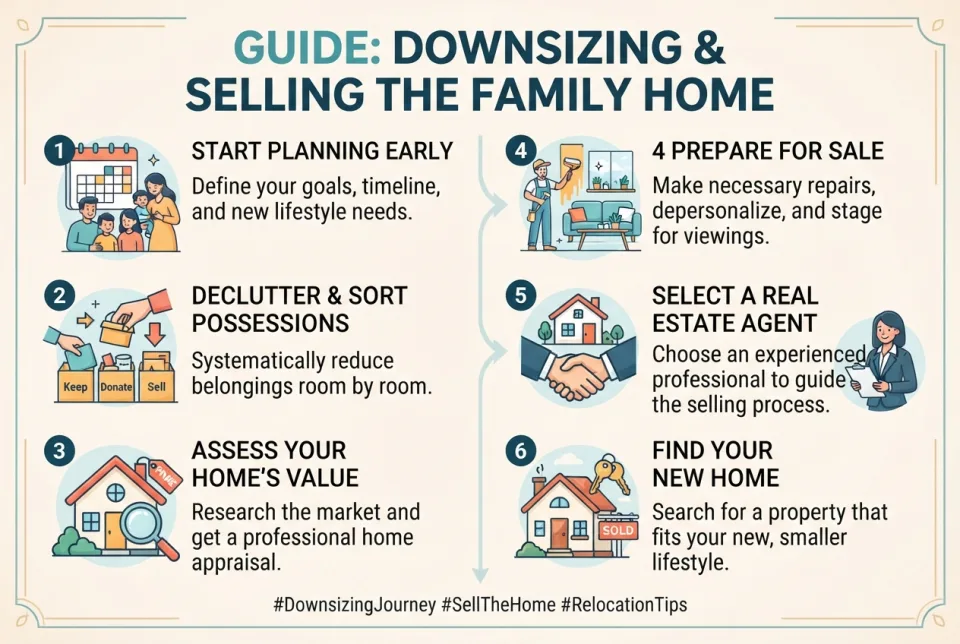
Quick answer
5 steps — read this before anything else
-
1
Clarify your budget and timeline: how much equity you have, what you can afford, and when you need to move.
-
2
Get a realistic market appraisal from at least two local estate agents.
-
3
Declutter, make minor repairs, and stage the home to appeal to buyers.
-
4
List the property, review offers carefully, and negotiate terms that fit your needs.
-
5
Coordinate the sale with your next home purchase or rental to avoid a gap in housing.
Important — please read
This content is general educational and informational only, and is not a substitute for professional medical advice, diagnosis or treatment. Always seek the advice of a qualified health provider with any questions you may have about a medical condition. Never disregard or delay seeking professional medical care because of something you read here. In an emergency or life-threatening situation, call your local emergency services (police, fire or ambulance) immediately.
Downsizing and selling the family home is often both a financial and emotional decision. Whether you are moving to a smaller place, relocating closer to family, or reducing expenses, a clear plan helps you avoid costly mistakes and unnecessary stress.
What is happening
You have decided (or need) to sell the home you have lived in, likely for many years, and move to a smaller or more suitable property. This usually involves paying off any remaining mortgage, covering selling costs, and using the remaining equity toward your next home. The process can take several months, so start planning early.
What to do first
- Assess your finances. Find out your outstanding mortgage balance, any early repayment penalties, and an estimate of your home's current market value. Subtract selling costs (agent fees, legal fees, taxes if applicable) to estimate your net proceeds.
- Set a realistic budget for your next home. Decide how much you can afford to spend, whether you will buy outright or need a new mortgage. Speak to a mortgage advisor if you are unsure.
- Define your timeline. Do you need to move by a certain date? Are you willing to rent temporarily if the sale and purchase do not align?
- Get professional valuations. Invite at least two or three local estate agents to value the property. Ask for evidence of recent comparable sales, not just a headline figure.
Preparing the home for sale
- Declutter aggressively. Buyers need to see space. Remove personal items, excess furniture, and years of accumulated belongings. Consider a skip or storage unit.
- Make minor repairs. Fix leaky taps, cracked tiles, squeaky doors, and peeling paint. These small issues can lower offers.
- Deep clean and stage. A clean, bright, neutral home sells faster. Remove strong odours and let in natural light.
- Gather documents. Have deeds, guarantees, planning permissions, and energy performance certificates ready.
Listing and selling
Choose an estate agent you trust and agree on a realistic asking price. Review all offers carefully: a slightly lower offer from a chain-free buyer may be more reliable than a higher offer from someone who still needs to sell. Once you accept an offer, instruct a solicitor or conveyancer to handle the legal work. Keep communication open with your buyer and your own seller (if you are buying) to reduce the risk of delays.
What NOT to do
- Do not accept the first valuation without checking comparable sales.
- Do not spend your estimated equity before the sale completes.
- Do not hide known problems with the property; you could face legal consequences.
- Do not rush into a purchase that stretches your budget just because you feel pressured to move quickly.
When to seek professional advice
Consult a solicitor or conveyancer for the legal side, a tax advisor if you are unsure about capital gains tax or inheritance matters, and a mortgage broker if you need financing. If the home is jointly owned or part of an estate, get legal advice before proceeding.
What to monitor
- Local market conditions and how long similar homes are taking to sell.
- Your buyer's progress and any chain issues.
- Your own budget as costs (agent fees, legal fees, moving costs) become clearer.
Downsizing is a big step, but with careful planning it can free up equity, reduce ongoing costs, and simplify your life. Start by getting valuations and a clear picture of your finances, then take it one step at a time. If you feel overwhelmed, speak to a financial advisor or a trusted family member before making final decisions.
Spotted an error? Report it — we correct factual mistakes promptly.
Read next
What should you do if you are considering a reverse mortgage?
A reverse mortgage can provide cash in retirement but comes with complex rules and long-term costs. Learn the essential steps to evaluate whether it fits your situation.
What should I do if I need to set up a power of attorney for an aging relative?
Setting up a power of attorney for an aging relative requires careful planning, legal advice, and clear communication. This guide outlines the key steps and considerations.
What should you do if you feel lonely or isolated after retirement?
Retirement can bring a sudden loss of daily social contact. Rebuilding connection takes small, deliberate steps, and persistent loneliness is worth discussing with a doctor.
What Should You Do If You Cannot Afford a Senior Living Community?
Senior living costs can exceed $50,000 per year, but there are real alternatives. Learn how to find affordable housing, in-home care, and financial assistance programs.
Related handy tools
Checklists, decision guides, scenarios and quizzes for the same situation.